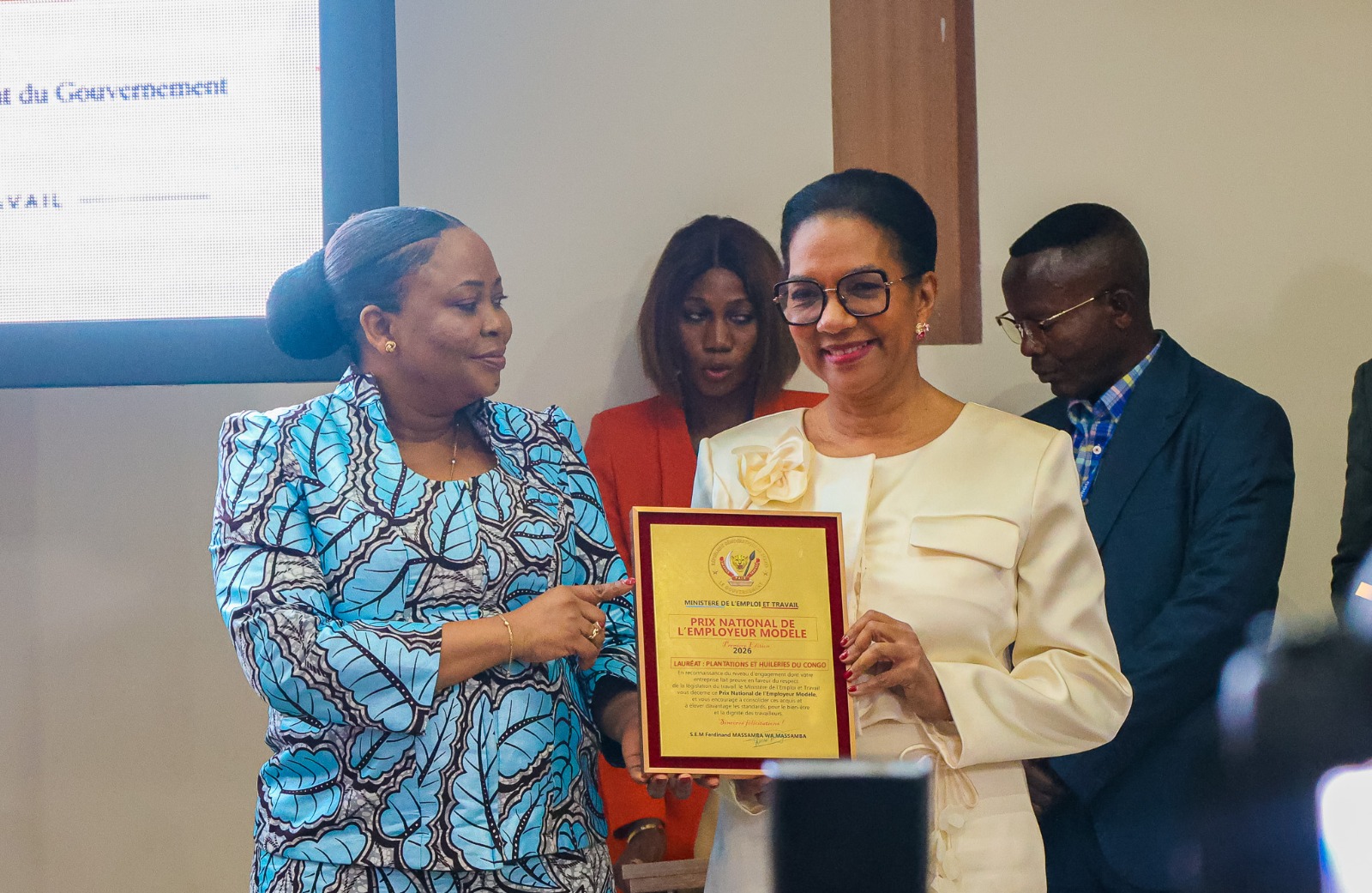
Kinshasa, 21 October 2026 – Plantations et Huileries du Congo (PHC), the leading palm oil producer in the Democratic Republic of the Congo (DRC), has received the 2026 National Model Employer Award, presented by the Ministry of Employment and Labour. The award recognises the company’s efforts to comply with labour legislation, promote formal employment and improve working conditions.
At the inaugural edition of the award, the Minister of Employment and Labour, H.E. Ferdinand Massamba wa Massamba, outlined the Government’s vision for employment and labour relations, emphasising the need to reconcile business performance with respect for workers.
“Through the National Model Employer Award, we aim to promote and recognise companies that stand out for the quality of their management, compliance with labour legislation and commitment to social dialogue. This distinction rewards organisations that put these principles into practice every day, placing social responsibility, respect for workers’ rights and improved working conditions at the heart of their priorities,” the Minister said.
The award recognises the efforts PHC has made as part of its transformation, which began in 2021 under the leadership of a Congolese management team, with the support of its majority shareholder, Kuramo Capital Management.
This transformation is reflected, among other things, in the growth of the company’s workforce, from 6,500 to 12,000 directly contracted employees across its three operating sites. This increase illustrates PHC’s contribution to formal employment and its commitment to continuing to develop its operations in the DRC.
For Monique Gieskes, CEO of PHC, the 2026 National Model Employer Award recognises the company’s ongoing efforts and encourages it to continue its transformation while keeping people at the heart of its priorities.
“Being a model employer means recognising the essential contribution our employees make to the company’s performance and development. This award strengthens our determination to continue creating a working environment that supports their well-being, professional growth and skills development. We believe that a company’s long-term success depends on its ability to support its teams, equip them to progress and enable them to contribute fully to a shared ambition,” Gieskes said.
Investing in People and Developing Skills
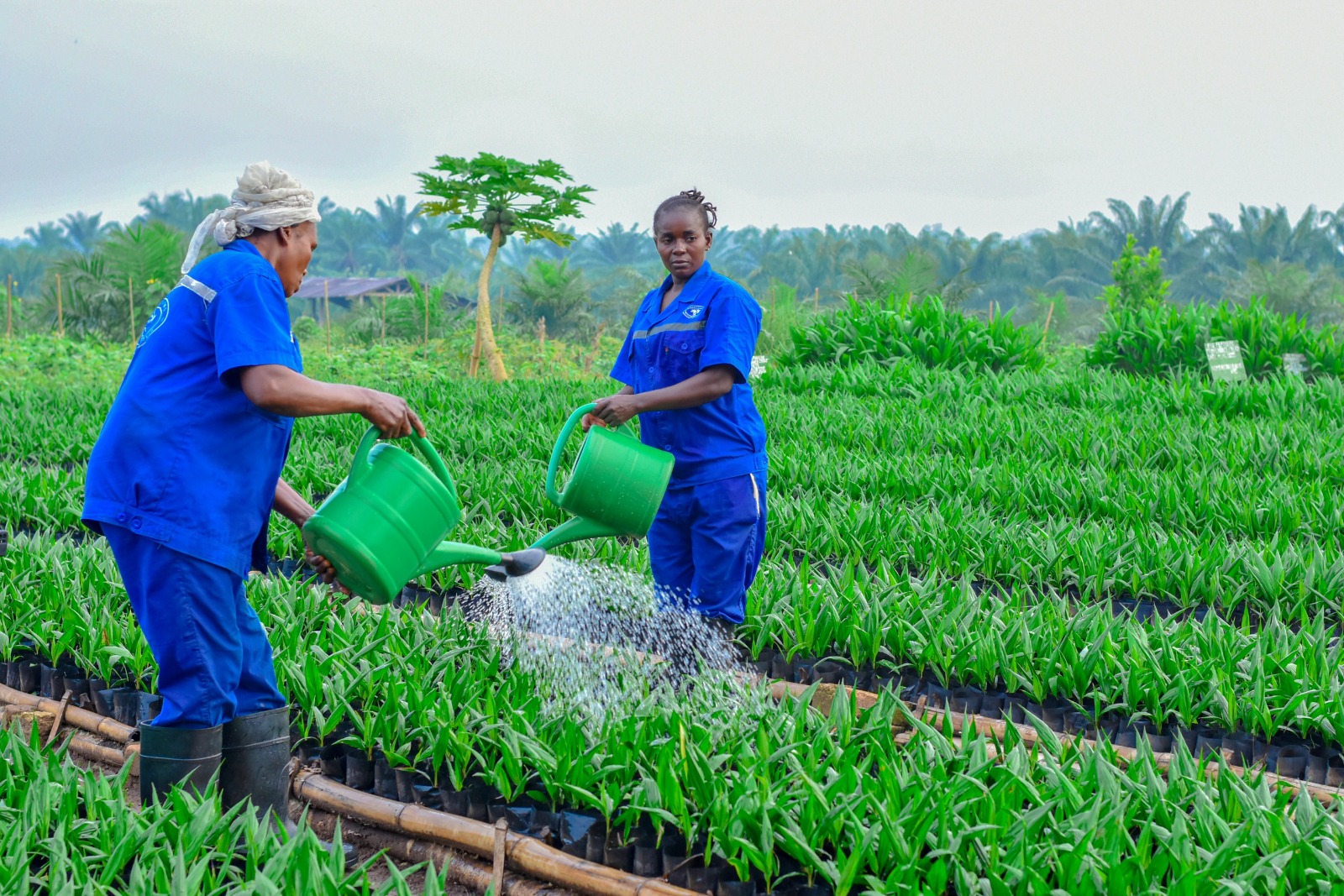
For PHC, human capital is a key pillar of the company’s performance, transformation and sustainable growth. With 12,000 directly contracted employees across its three operating sites Lokutu in Tshopo Province, Yaligimba in Mongala Province and Boteka in Équateur Province—PHC places training and skills development at the heart of its growth strategy.
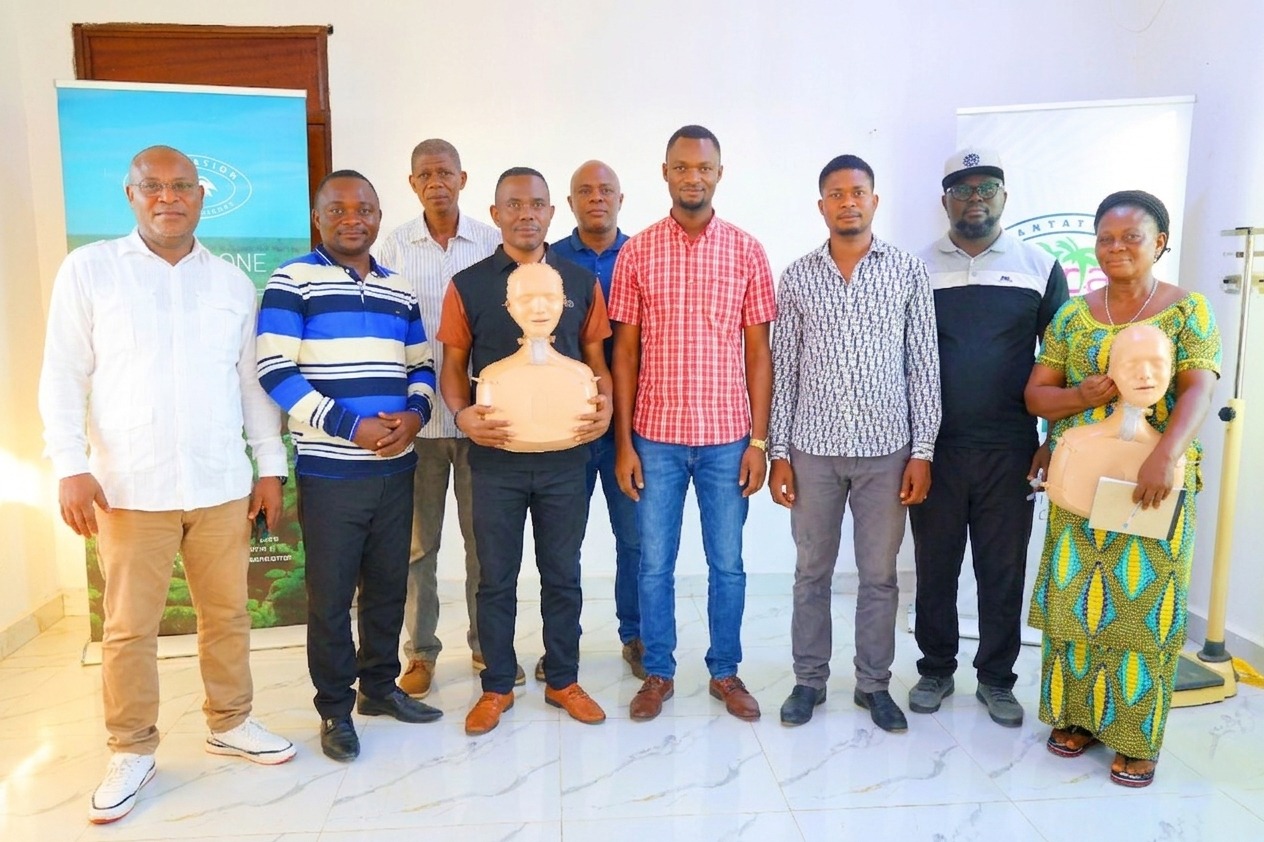
Through the PHC Academy, the company invests in training employees in the various occupations that support its activities, including agricultural production, industrial operations, equipment maintenance, logistics, and administrative and support functions. In 2025, nearly 1,000 hours of training were delivered, helping strengthen technical and professional skills, consolidate expertise and improve team performance.
By developing employees’ skills and recognising talent within the company, PHC strengthens its operational expertise and supports the growth of its activities. This approach also helps employees progress professionally and prepares the skills needed to sustain the company’s continued development.
Promoting Inclusion and Increasing Women’s Participation
PHC continues to work to increase women’s participation and expand their professional opportunities in a sector traditionally dominated by men.
Women’s representation in the company’s workforce rose from approximately 4% in 2021 to 20% in 2025, marking a significant increase in their presence across the organisation.
Today, women contribute to PHC’s activities in a range of areas, including agricultural production, industrial operations, laboratory work and quality control, logistics, and administrative functions. This progress reflects the company’s commitment to broadening women’s participation in its operations and development.
Employee Well-being: A Commitment of a Model Employer
PHC’s commitment to its employees is reflected in its focus on working conditions, health and safety, and the well-being of their families.
The company works to ensure the regular payment of wages and the provision of benefits in accordance with applicable requirements. It also fulfils its social security obligations, including registration with the relevant institution and the declaration of its employees.
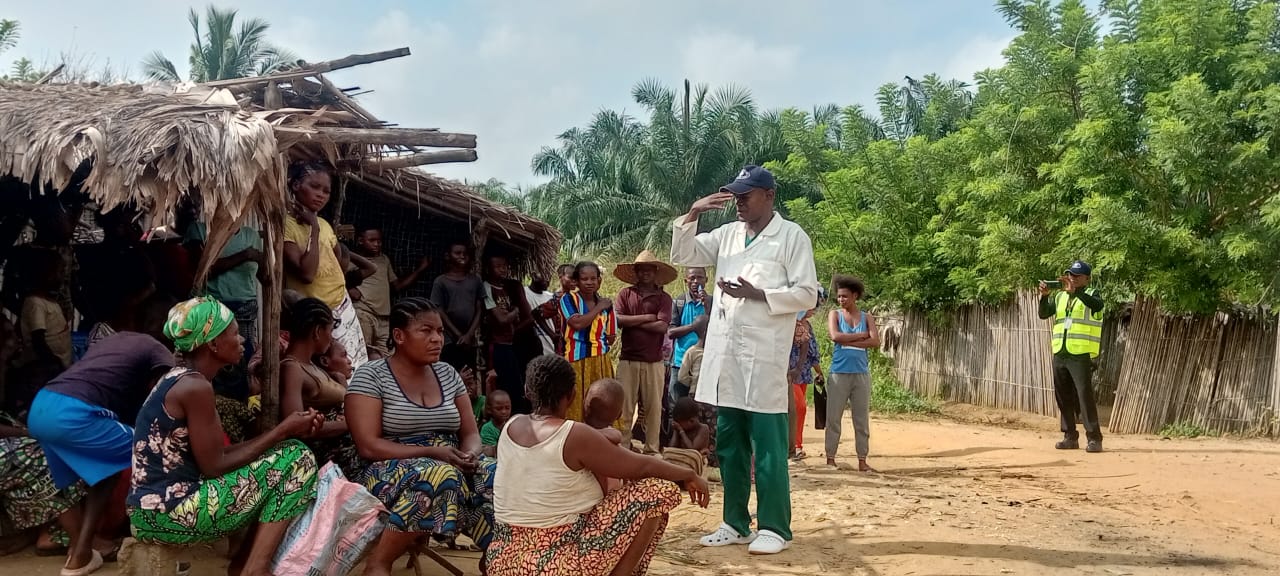
Employees and their families also have access to healthcare through PHC’s health network, which comprises four hospitals, four health centres and 18 dispensaries serving communities around its operating sites.
To prevent occupational risks, PHC implements safety measures suited to its activities and provides employees with personal protective equipment appropriate to their roles. These measures are intended to help prevent accidents and continuously improve employee protection.
The company also supports the education of employees’ children, who can attend schools built by PHC. This approach combines professional development, worker protection and support for families.
Through these commitments, PHC aims to continue ensuring that respect for workers’ rights, their protection and their well-being remain central to its approach as a model employer.
Contributing to the Socio-economic Development of Local Communities
Beyond its agro-industrial operations and contribution to employment, PHC works alongside local communities in the rural areas where it operates. Its initiatives help improve access to education, healthcare, drinking water and essential local infrastructure.
These efforts have led to tangible results, including:
- 46 schools built or rehabilitated, benefiting approximately 30,000 children;
- 15 health centres built by PHC and handed over to the State, with management entrusted to the health zones closest to the company’s operating sites;
- 73 water boreholes to improve access to drinking water;
- Road rehabilitation, bridge construction and the development of local markets, helping improve mobility, access to essential services and economic exchange.
PHC’s agro-industrial activities also create opportunities for a wide range of economic stakeholders, including suppliers, transport operators, service providers and local businesses. Through these relationships, the company contributes to local economic activity and creates opportunities beyond its own workforce.
Through its achievements and the economic benefits generated by its operations, PHC contributes to the socio-economic development of neighbouring communities and strengthens the local economic fabric.
Building on Progress and Strengthening Commitments
The 2026 National Model Employer Award recognises PHC’s efforts to comply with labour legislation, promote formal employment and improve working conditions. It also encourages the company to continue its work in skills development, employee safety and well-being.
As job creation remains a national priority championed by the President of the Republic, Félix-Antoine Tshisekedi Tshilombo, PHC intends to continue developing its activities and contributing to this ambition. The company reaffirms its commitment to combining business performance, sustainable job creation, investment in human capital and a contribution to the development of the Democratic Republic of the Congo.
About PHC
Plantations et Huileries du Congo (PHC) is the leading palm oil producer in the Democratic Republic of the Congo. Founded in 1911, the company operates three agro-industrial sites in Lokutu, Tshopo Province; Yaligimba, Mongala Province; and Boteka, Équateur Province.
With 12,000 directly contracted employees, PHC is one of the leading players in the DRC’s agro-industrial sector and labour market. Beyond production, the company contributes to the socio-economic development of local communities through initiatives in healthcare, education, access to water and infrastructure, as well as the economic opportunities generated around its operations.
For more information: www.phc-congo.com